
 United States
 Canada
 Japan
Japan United Kingdom
 Argentina
 Bangladesh
 Bhutan
 Bolivia
 Brazil
 Brunei Darussalam
 Cambodia
 Chile
Chile Colombia
 Costa Rica
 Ecuador
 Fiji
Fiji Guyana
 India
India Indonesia
 Kiribati
 Laos
Laos Macau
Macau Maldives
 Mongolia
 Nauru
Nauru Nepal
Nepal Pakistan
 Papua New Guinea
 Paraguay
 Peru
Peru Solomon Islands
 Suriname
 Tonga
Tonga Tuvalu
 Uruguay
 Vanuatu
 Venezuela
What should you know before choosing a sunscreen?
Choosing the right sunscreen starts with understanding the difference between mineral sunscreen and chemical sunscreen. Both protect your skin from UV damage, but they work in different ways. A face sunscreen is essential every day, rain or shine, hot or cold, to help maintain healthy, radiant skin.
Mineral formulas reflect UV rays, while chemical formulas absorb them. If you’re looking for a clean, skin-loving SPF, explore bareMinerals’ Mineral Sunscreen Collection.
What is mineral sunscreen and how does it work?
Mineral sunscreen (or physical sunscreen) uses ingredients like zinc oxide sunscreen to sit on the skin and reflect UV rays.
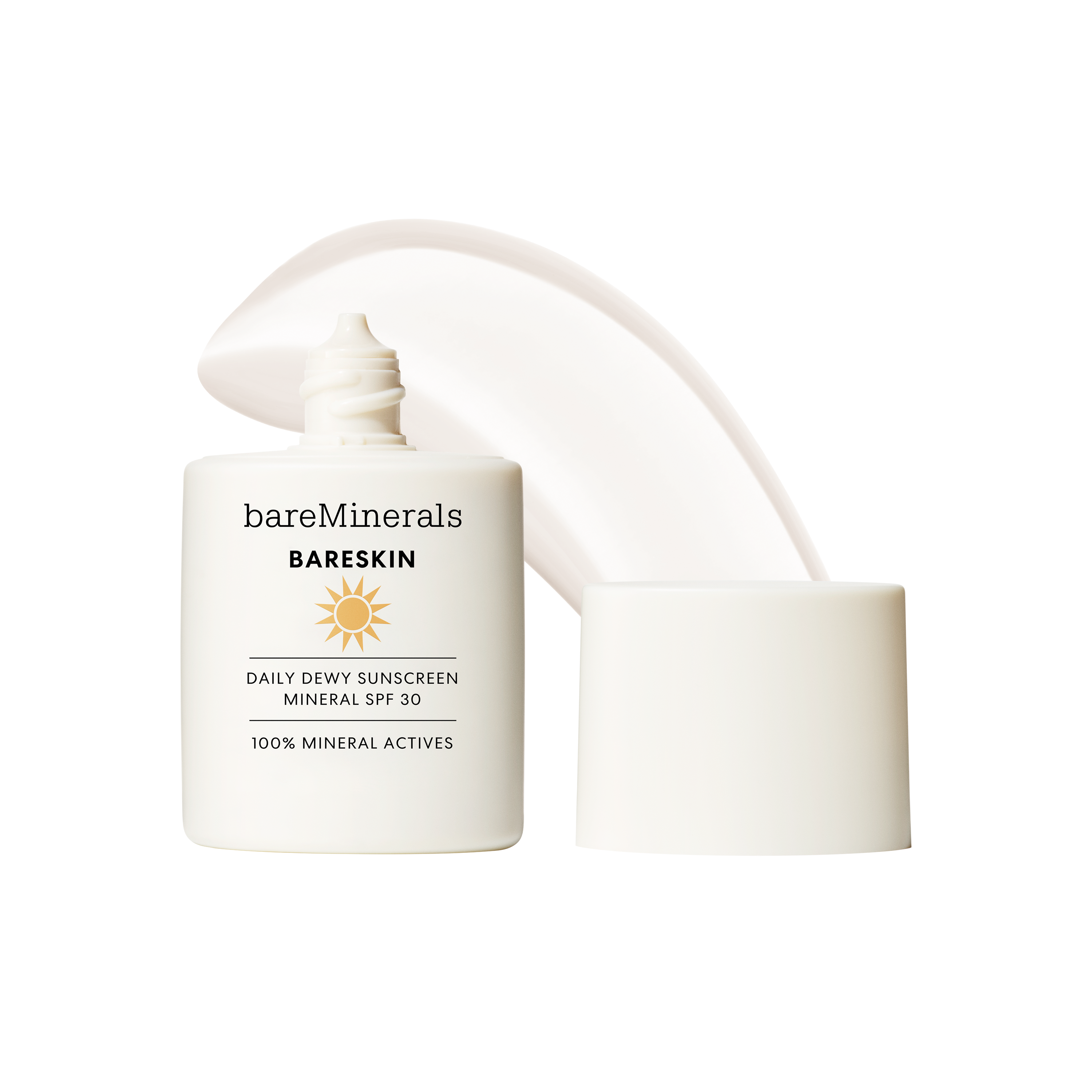

BARESKIN® Daily Dewy Sunscreen Mineral SPF 30
Ultra-light mineral SPF 30 sunscreen that primes, hydrates, and protects skin with little to no white cast.
Regular price WS$ 122.00
Aligned with BareMinerals’ clean beauty philosophy, these formulas are gentle, non-irritating, and ideal for sensitive skin. They also layer effortlessly with complexion products, like a tinted moisturizer for a natural, even finish.
What is chemical sunscreen and how is it different?
A chemical sunscreen, or UV absorption sunscreen, works by absorbing UV rays and releasing them as heat. These formulas are often a lightweight sunscreen option with an invisible finish.
The main difference? Mineral reflects, chemical absorbs.
Build your full routine here.
Which sunscreen is better for sensitive or acne prone skin?
For sunscreen for sensitive skin or sunscreen for acne, mineral formulas are typically the best choice. They’re a gentle sunscreen option that’s often non-comedogenic and supports the skin barrier.
Pair your SPF with breathable setting products for a flawless finish.
Which sunscreen gives a more natural and dewy finish?
Today’s mineral formulas deliver more than protection—they create a radiant, dewy sunscreen effect for naturally glowing skin sunscreen results. With hydrating benefits, a hydrating sunscreen can double as a luminous base under makeup. For all of these benefits, try our new BARESKIN® Daily Dewy Sunscreen Mineral SPF 30.
How do you choose the best sunscreen for daily use?
The best sunscreen for everyday depends on your skin type, desired finish, and routine. A daily sunscreen should feel lightweight, blend easily, and work seamlessly with your makeup.
Which sunscreen is right for your routine?
When it comes to mineral vs chemical sunscreen, both protect—but mineral stands out for its gentle, clean approach and skin-enhancing benefits. For everyday wear, BARESKIN® Daily Dewy Sunscreen Mineral SPF 30 is a natural fit for a clean routine.
Explore the Mineral Sunscreen Collection.
FAQs
1. Is mineral sunscreen better than chemical sunscreen?
In the mineral vs chemical sunscreen debate, it depends on your skin. Mineral formulas are ideal for sensitive skin thanks to their gentle, sit-on-top protection.
2. What is the difference between mineral and chemical sunscreen?
The difference between mineral and chemical sunscreen is simple: mineral reflects UV rays, while chemical absorbs them.
3. Is mineral sunscreen good for sensitive skin?
Yes—mineral SPF is a great sunscreen for sensitive skin, especially with soothing ingredients like zinc oxide.
4. Does mineral sunscreen leave a white cast?
Modern formulas minimize mineral sunscreen white cast, blending in for a more natural or dewy finish.
5. Can you wear mineral sunscreen every day?
Absolutely. Daily sunscreen is essential, and mineral SPF is ideal for everyday use under makeup.
6. Which sunscreen is better under makeup?
For sunscreen under makeup, modern mineral formulas offer a smooth, dewy base that layers beautifully.